
The Ron Paul Institute for Peace and Prosperity
Subscribe to the Institute View Us on YouTube Follow Us On Twitter Join Us on Facebook Join Us at Google Plus

Search Results

for:

Philip Giraldi

Crying Wolf Over Iran

Bibi

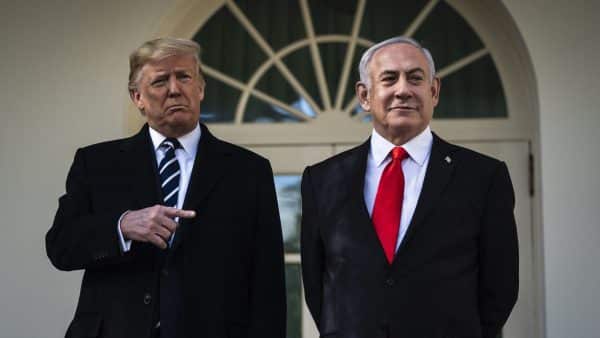
Israeli Prime Minister Benjamin Netanyahu has been trying to convince the audience in both the United States and Europe that new Iranian President Hassan Rouhani is a "wolf in sheep’s clothing" intent on beguiling the west with empty promises while proceeding full speed with a nuclear weapons program. Unfortunately for Netanyahu, few are interested in hearing an argument that has been repeated over and over again for more than twenty years in one form or another regarding the imminence of a "Mullah nuke." If there is a true predatory beast tale intrinsic to the oft repeated narrative, it perhaps should be the story of the boy who cried wolf.

All of which is not to suggest that Netanyahu’s friends in the United States have given up. Republican Senators Marco Rubio and Mark Kirk have welcomed the overture from Iran by calling for tightened sanctions to send the signal that Washington is really serious about using a stick before offering any carrots, a hardening of the same old punishment cycle that would hardly be an inducement for concessions by Tehran. They also demand that Iran give up any ability to enrich uranium, guaranteeing that negotiations will go nowhere. A number of Democratic Senators who are close to the Israel Lobby are also on board in opposing any easing of sanctions.
read on...

Does Our Military Spending Really Make Us Better Off?

Us Vs World

The ill-advised launching of a few barrages of cruise missiles at Syria, which was the White House’s fervent desire back in August could have cost as much as five billion dollars or so by the time it was all over, an act of war carried out just to establish the "credibility" of the White House. Would it have been money well spent to kill a few hundred Syrians?

The Navy meanwhile keeps building multi-billion dollar aircraft carriers even though they are highly vulnerable to much cheaper missiles and although it already has eleven of them while the Air Force is getting the problem plagued and cost overrun prone F-35 fighter at $100 million a pop in a $857 billion program even though the aircraft is demonstrably not needed for national defense.
read on...

What's the Evidence Behind the Case for War?

Tomahawk

If the arguments being presented by President Obama and Secretary of State John Kerry for attacking Syria seem increasingly shrill and disjointed that might well be because a legitimate case cannot be made for going to war. The central argument—i.e., that punishing al-Assad will “change his calculus” and dissuade him from using chemical weapons against rebel forces embedded within the civilian population—relies on demonstrating that al-Assad has already done just that, a case that has not been credibly made thus far. Nor would a “shot across the bow” strike be likely to influence the thinking of a regime that theoretically might find itself with its back against the wall, willing to use all resources at hand to defeat a ruthless enemy. Still less does the argument that Washington must act lest the chemical weapons fall into the hands of terrorists and be used against American and other Western targets convince. Such a scenario is much more likely if the rebels, who undeniably include many extremists, are empowered through military action to such an extent that they might eventually triumph. If Washington wishes to prevent possible weapons of mass destruction from falling into the hands of terrorists, it should be doing everything it can to support the Syrian government. Any scenario that involves attacking the very soldiers who are presumably guarding the chemical weapons is a recipe for disaster.

As has often been the case in other situations over the past 12 years, Washington has maneuvered itself into a new crisis because it is failing to see the Syrian situation in all its complexity, preferring simple solutions that do not involve any commitment or long-term strategic planning. One former intelligence colleague has called it “a very poorly defined problem” that will not be solved by lobbing a few Tomahawk cruise missiles towards Damascus. That is the issue precisely—failing to understand what the problem is frustrates any attempt to devise a reasonable solution.


read on...

Boston Becomes Toxic

A number of articles about the Boston terrorist attack that I have read recently reminded me that what is either kept out of the media or otherwise hidden is often more important than what actually appears. One was a feature article entitled “Ron Paul Slams Boston Police. Has he Gone too Far?” by Peter Grier of the normally sensible Christian Science Monitor. The remainder were also related to the Boston Marathon, a discussion in various places in the media of the possibility that the United States will take steps to make it easier for the intelligence services and law enforcement to read emails and social media entries in “real time” to be able to forestall home grown terrorists. Making such access easier means eliminating those few restrictions that currently exist to protect personal privacy and prevent unlawful searches.
read on...


Authors

Tags