
The Baghdad Bombings, Islamic State, and What America Still Hasn’t Learned
Friday July 8, 2016

The suicide bombings in Baghdad by Islamic State, timed for maximum violence, are only the latest reminders that the United States should not downplay the group.
Since the wave of Islamic State suicide bombings in May – killing 522 people inside Baghdad, and 148 people inside Syria – American officials have downplayed the suicide bombing strategy as defensive. Brett McGurk, the Special Presidential Envoy in the fight against Islamic State, saidthe group “returned to suicide bombing” as the area under its control shrinks. The American strategy of focusing primarily on the “big picture” recapture of territory seems to push the suicide bombings to the side. “It’s their last card,” stated a compliant Iraqi spokesperson in response to the attacks.
The reality is just the opposite. Just a day after the June 26 liberation of Fallujah, car bombs exploded in eastern and southern Baghdad. Two other suicide bombers were killed outside the city. An improvised explosive device exploded in southwest Baghdad a day earlier. And now the latest, with a death toll approaching 200.
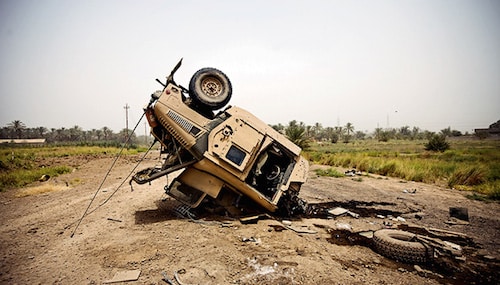
Washington should know better than to underestimate the power of small weapons to shape large events. After Donald Rumsfeld labeled Iraqi insurgents as “dead enders” in 2003, they began taking a deadly toll of American forces via suicide bombs. It was the 2006 bombing of the Shi’ite al-Askari Golden Mosque in Samarra that kicked the Iraqi civil war into high gear. It was improvised explosive devices and car bombs that kept American forces on the defensive through 2011.
read on...