The Ron Paul Institute for Peace and Prosperity
Subscribe to the Institute View Us on YouTube Follow Us On Twitter Join Us on Facebook Join Us at Google Plus

Search Results

for:

Gareth Porter

How the Pentagon Sank the US-Russia Deal in Syria – and the Ceasefire

undefinedundefined

Another US-Russian Syria ceasefire deal has been blown up.

Whether it could have survived even with a US-Russian accord is open to doubt, given the incentives for al-Qaeda and its allies to destroy it. But the politics of the US-Russian relationship played a central role in the denouement of the second ceasefire agreement.

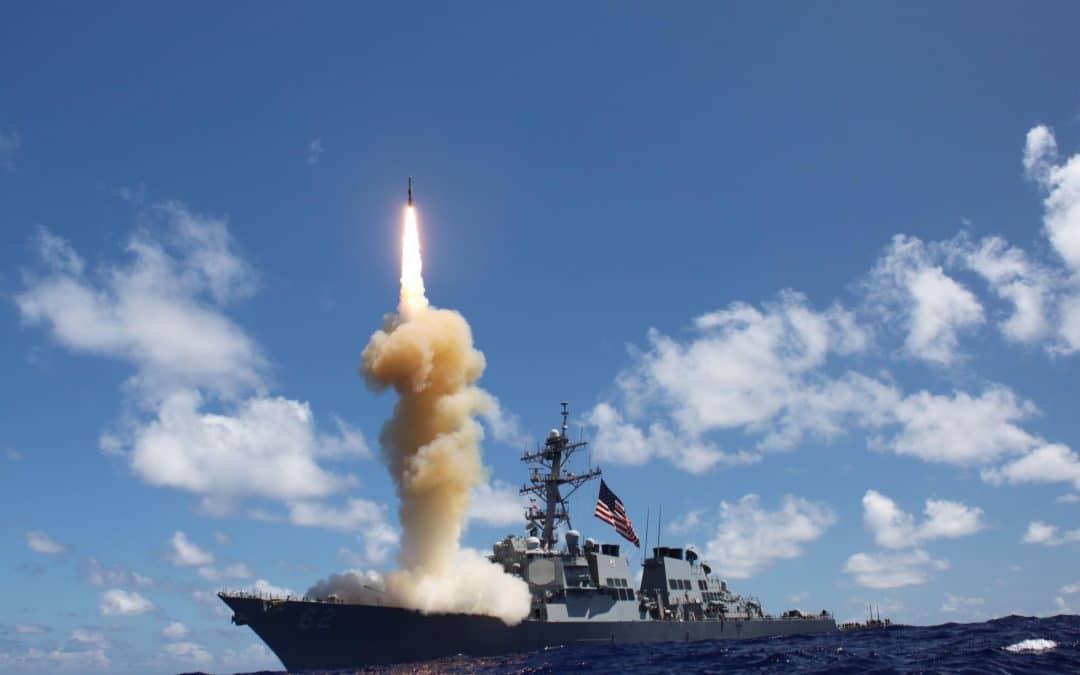
The final blow apparently came from the Russian-Syrian side, but what provoked the decision to end the ceasefire was the first ever US strike against Syrian government forces on 17 September.

That convinced the Russians that the US Pentagon had no intention of implementing the main element of the deal that was most important to the Putin government: a joint US-Russian air campaign against the Islamic State (IS) militant group and al-Qaeda through a “Joint Implementation Centre”. And it is entirely credible that it was meant to do precisely that.
read on...

The Real US Syria Scandal: Supporting Sectarian War

undefined

The main criticism of US policy in Syria has long been that President Barack Obama should have used US military force or more aggressive arms aid to strengthen the armed opposition to Assad. The easy answer is that the whole idea that there was a viable non-extremist force to be strengthened is a myth – albeit one that certain political figures in London and Washington refuse to give up.

But the question that should have been debated is why the Obama administration acquiesced to its allies funding and supplying a group of unsavoury sectarian armed groups to overthrow the Assad regime.

That US acquiescence is largely responsible for a horrible bloodletting that has now killed as many as 400,000 Syrians. Worse yet, there is still no way to end the war without the serious threat of sectarian retribution against the losers.

“The Obama administration bears responsibility for this atrocity, because it could have prevented Turkey, Qatar and Saudi Arabia from launching their foolishly adventurous war in Syria. None of them did so out of desperate need; it was a war of choice in every case. And each of the three states is part of the US security system in the Middle East, providing military bases to NATO or to the United States and depending on US support for its security.
read on...

The Sham Rebrand of al-Qaeda's Nusra Front

undefined

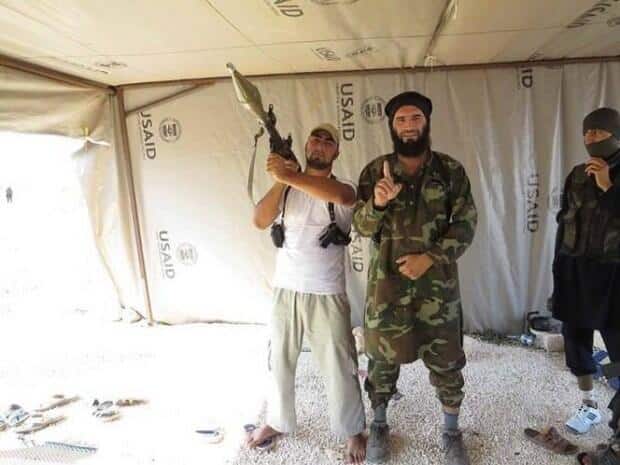
The Nusra Front’s adoption of the new name Jabhat Fateh al-Sham and claim that it has separated itself from al-Qaeda was designed to influence US policy, not to make the group any more independent of al-Qaeda. 

The objective of the manoeuvre was to head off US-Russian military cooperation against the jihadist group, renamed last week, based at least in part on the hope that the US bureaucratic and political elite, who are lining up against a new US-Russian agreement, may block or reverse the Obama administration’s intention to target the al-Qaeda franchise in Syria. 

The leader of the Syrian jihadist organisation Mohammad al-Golani and al-Qaeda leader Ayman al-Zawahiri both made a great deal of the public encouragement that Zawahiri gave to separation from the parent organisation. The idea was that the newly rebranded and supposedly independent jihadist organisation in Syria would be better able to fulfill its role in the Syrian revolution.

But to anyone who has followed the politics of Nusra Front’s role in the Syrian war, the idea that Zawahiri would actually allow its Syrian franchise to cut loose from the central leadership and function with full independence is obviously part of a political sham.
read on...

The Syria 'Dissent' Memo and US Bureaucratic Pressure Strategy

undefined

The memorandum by 51 State Department officials calling for US military intervention in Syria last week has been treated in news media coverage as a case of dissent from existing Syria policy by individual officials involved in Syria policy.

But the memo has all the earmarks of an initiative that had the blessing of the most senior officials in the department – including Secretary of State John Kerry himself - rather than having been put together by individual officials entirely on their own. And it may mark the beginning of an effort to take advantage of the presidential candidacy of Hillary Clinton.

The memo called for a “more militarily assertive US role” in the Syrian conflict in the form of “a judicious use of stand-off and air weapons, which would undergird and drive a more focused and hard-nosed US-led diplomatic process".  That is precisely the policy option that Secretary of State John Kerry has been widely reported to have championed privately for years. As the story in the New York Times, which published the supposedly confidential memo, noted, “[H]igher-level State Department officials are known to share their concerns.”
read on...

The Classified '28 Pages': A Diversion From Real US-Saudi Issues

undefined

The controversy surrounding the infamous “28 pages” on the possible Saudi connection with the terrorists that were excised from the joint Congressional report on the 9/11 attacks is at fever pitch. But that controversy is a distraction from the real problems that Saudi Arabia’s policies pose to the United States and the entire Middle East region.

The political pressure to release the 28 pages has been growing for the past couple of years, with resolutions in both houses of Congress urging the president to declassify the information. But now legislation with bipartisan sponsorship has advanced in Congress that would deprive any foreign government of sovereign immunity in regard to responsibility for a terrorist attack on US soil and thus make it possible to sue the Saudi government in court for damages from the 9/11 attacks. 

That development prompted Saudi Foreign Minister Adel al-Jubeir to threaten last month to pull out as much as $750 billion in Saudi assets held in the United States. The Obama administration opposes the legislation, warning of “unintended consequences” – specifically that the US government could face lawsuits because of its actions abroad. Analysts of Saudi economic policy, however, do not take al-Jubeir’s threat very seriously since it would simply punish the Saudi economy.
read on...

Reporting (or Not) the Ties Between US-Armed Syrian Rebels and Al Qaeda’s Affiliate

undefined

A crucial problem in news media coverage of the Syrian civil war has been how to characterize the relationship between the so-called “moderate” opposition forces armed by the CIA, on one hand, and the Al Qaeda franchise Al Nusra Front (and its close ally Ahrar al Sham), on the other. But it is a politically sensitive issue for US policy, which seeks to overthrow Syria’s government without seeming to make common cause with the movement responsible for 9/11, and the system of news production has worked effectively to prevent the news media from reporting it fully and accurately.

The Obama administration has long portrayed the opposition groups it has been arming with anti-tank weapons as independent of Nusra Front.  In reality, the administration has been relying on the close cooperation of these “moderate” groups with Nusra Front  to put pressure on the Syrian government. The United States and its allies–especially Saudi Arabia and Turkey–want the civil war to end with the dissolution of the government of Syrian President Bashar al-Assad, who is backed by US rivals like Russia and Iran.

Reflecting the fact that Nusra Front was created by Al Qaeda and has confirmed its loyalty to it, the administration designated Nusra as a terrorist organization in 2013.  But the US has carried out very few airstrikes against it since then, in contrast to the other offspring of Al Qaeda, the Islamic State or ISIS (Daesh), which has been the subject of intense air attacks from the US and its European allies.  The US has remained silent about Nusra Front’s leading role in the military effort against Assad, concealing the fact that Nusra’s success in northwest Syria has been a key element in Secretary of State John Kerry’s diplomatic strategy for Syria.
read on...

Kerry Sought Missile Strikes to Force Syria's Assad to Step Down

undefined

Jeffrey Goldberg’s newly published book-length article on Barack Obama and the Middle East includes a major revelation that brings US Secretary of State John Kerry’s Syrian diplomacy into sharper focus: it reports that Kerry has sought on several occasions without success over the past several months to get Obama’s approval for cruise missile strikes against the Syrian government. 

That revelation shows that Kerry’s strategy in promoting the Syrian peace negotiations in recent months was based on much heavier pressure on the Assad regime to agree that President Bashar al-Assad must step down than was apparent. It also completes a larger story of Kerry as the primary advocate in the administration of war in Syria ever since he became Secretary of State in early 2013.

Goldberg reports that “on several occasions” Kerry requested that Obama approve missile strikes at “specific regime targets”, in order to “send a message” to Assad – and his international allies – to “negotiate peace”. Kerry suggested to Obama that the US wouldn’t have to acknowledge the attacks publicly, according to Goldberg, because Assad “would surely know the missiles’ return address”.
read on...

'Plan B' and the Bankruptcy of US Syria Policy

undefined

US Secretary of State John Kerry provoked widespread speculation when he referred in testimony before the Senate foreign relations committee last week to “significant discussions” within US President Barack Obama's administration about a “Plan B” in Syria. The speculation was further stoked by a “senior official” who told CBS News that options under consideration included "'military-like' measures that would make it harder for the regime and its allies to continue their assault on civilians and US-backed rebels.”

But “Plan B” is more complicated than that. A report by CNN’s Pentagon correspondent Barbara Starr on 26 February leaves little room for doubt that the administration’s cupboard of policy options is actually bare. An unnamed “senior US official” at the Pentagon admitted that “Plan B” is actually “more an idea than a specific course of action”. In other words, the administration’s national security policymakers believe something more should be done in Syria, but they are not at all clear what could be done now.

The official said three options were under discussion, none of which is even close to being realistic in the present situation: an increase in US Special Forces on the ground, an increase in arms assistance to fighters opposing Syrian President Bashar al-Assad, and a no-fly zone.
read on...

Obama’s ‘Moderate’ Syrian Deception

undefined

Secretary of State John Kerry insisted at the Munich Security Conference on Saturday that the agreement with Russia on a temporary halt in the war in Syria can only be carried out if Russia stops its airstrikes against what Kerry is now calling “legitimate opposition groups.”

But what Kerry did not say is that the ceasefire agreement would not apply to operations against Al Qaeda’s Syrian franchise, the Nusra Front, which both the United States and Russia have recognized as a terrorist organization. That fact is crucial to understand why the Obama administration’s reference to “legitimate opposition groups” is a deception intended to mislead public opinion.

The Russian airstrikes in question are aimed at cutting off Aleppo city, which is now the primary center of Nusra’s power in Syria, from the Turkish border. To succeed in that aim, Russian, Syrian and Iranian forces are attacking rebel troops deployed in towns all along the routes from Aleppo to the border. Those rebels include units belonging to Nusra, their close ally Ahrar al-Sham, and other armed opposition groups – some of whom have gotten weapons from the CIA in the past.

Kerry’s language suggests that those other “legitimate opposition groups” are not part of Nusra’s military structure but are separate from it both organizationally and physically. But in fact, there is no such separation in either of the crucial provinces of Idlib and Aleppo.
read on...

US Military Leadership Resisted Obama's Bid for Regime Change in Syria, Libya

undefined

Seymour Hersh’s recent revelations about an effort by the US military leadership in 2013 to bolster the Syrian army against jihadist forces in Syria shed important new light on the internal bureaucratic politics surrounding regime change in US Middle East policy. Hersh’s account makes it clear that the Obama administration’s policy of regime change in both Libya and Syria provoked pushback from the Joint Chiefs of Staff (JCS). 

That account and another report on a similar episode in 2011 suggest that the US military has a range of means by which it can oppose administration policies that it regards as unacceptable. But it also shows that the military leadership failed to alter the course of US policy, and raises the question whether it was willing to use all the means available to stop the funnelling of arms to al-Nusra Front and other extremist groups in Syria.

Hersh details a JCS initiative in the summer of 2013 to share intelligence on Islamic State and al-Qaeda organisations with other German, Russian and Israeli militaries, in the belief that the information would find its way to the Syrian army. Hersh reports that the military leadership did not inform the White House and the State Department about the “military to military” intelligence sharing on the jihadist forces in Syria, reflecting the hardball bureaucratic politics practised within the national security institutions.
read on...


Authors

Tags